







It usually starts innocently. You open Instagram, TikTok, X, or YouTube for a quick check, maybe while waiting for the kettle to boil or before going to sleep. Then suddenly 10 minutes becomes 45. Your brain feels crowded, your mood dips, and somehow you are more restless than before. That familiar spiral has a name: doom-scrolling. And for millions of people, especially younger users, it is quietly chipping away at wellbeing one scroll at a time.
Quick summary:
- Doom-scrolling often begins as a short break but stretches far longer than intended.
- Many people feel emotionally worse after long social media sessions, and research suggests that feeling is real.
- The World Happiness Report, produced with work from the Wellbeing Research Centre at the University of Oxford, points to a clear link between excessive social media use and lower wellbeing.
- Young people, especially girls in Western countries, appear to be affected most.
- Light use may be harmless for many people, but heavy use is linked to worse mental wellbeing.
- Small changes such as deleting apps, setting harder-to-bypass limits, and replacing passive scrolling with real connection can help.
Doom-scrolling feels normal now, and that is part of the problem
The reason doom-scrolling is so hard to spot is that it rarely feels dramatic in the moment. It feels ordinary. You are tired, bored, stressed, lonely, or just trying to switch off. Social media offers instant stimulation with almost no effort. One video becomes another. One upsetting headline leads to another comment thread. One friend’s update turns into a flood of comparison.
What makes this habit so powerful is that it does not announce itself as harmful. It disguises itself as entertainment, connection, information, or relaxation. But when the session ends, many people notice the same emotional crash: lower mood, more anxiety, more irritation, and a vague sense that they have wasted time without actually feeling restored.
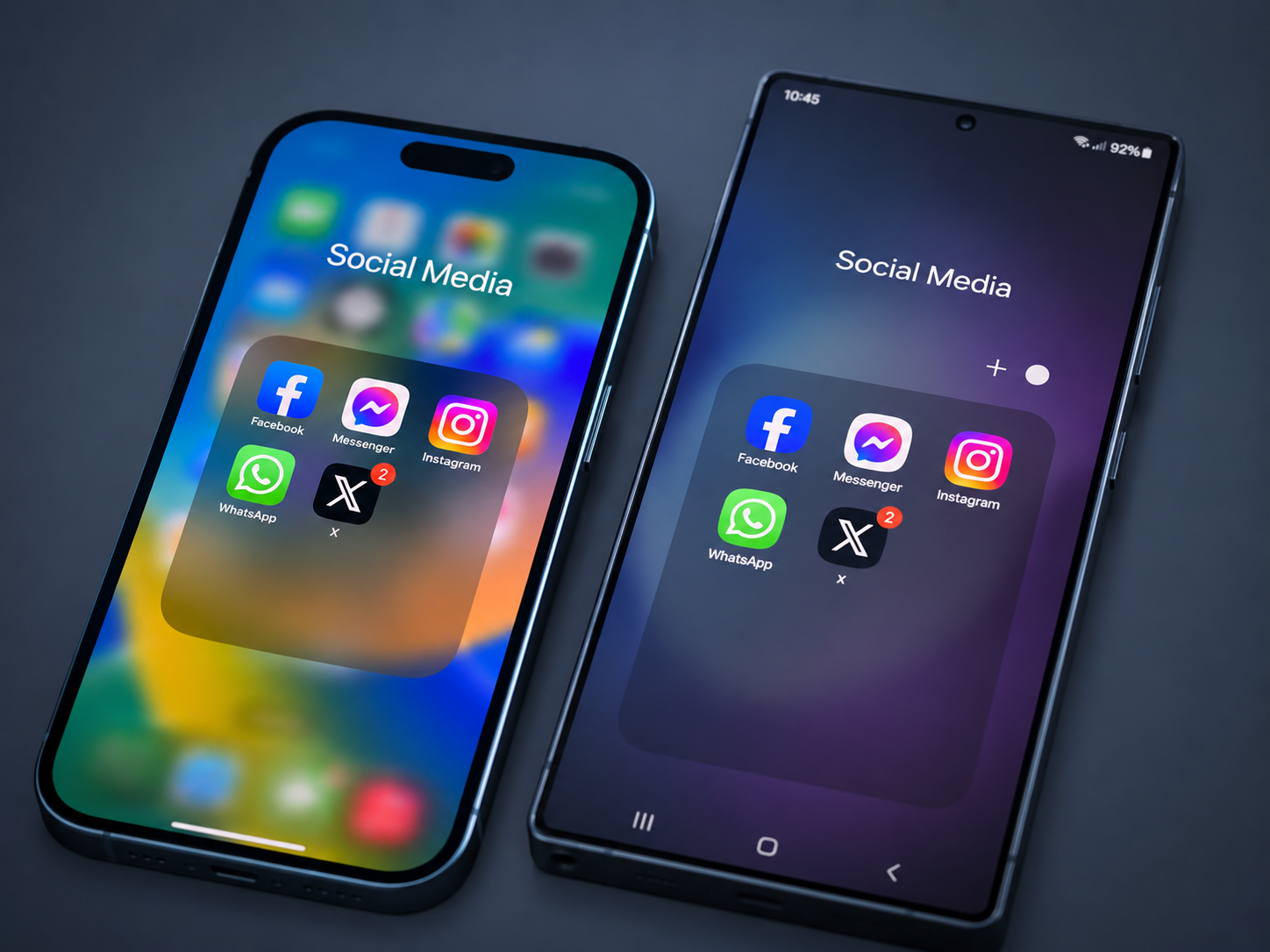
That drained feeling after scrolling is not just in your head
Plenty of people assume they are simply being weak, overly sensitive, or bad at self-control. But the evidence increasingly suggests something more important: excessive social media use is not just a personal quirk. It is associated with lower wellbeing in measurable ways.
One of the clearest signals comes from the World Happiness Report, which drew on research connected to the Wellbeing Research Centre at the University of Oxford. The report highlights a clear relationship between heavy social media use and lower life satisfaction and wellbeing. In other words, if you often feel worse after too much scrolling, that reaction is not random. It lines up with broader population-level findings.
This matters because it shifts the conversation. Instead of treating social media exhaustion as a private failure, it helps frame it as a predictable response to a digital environment built to capture and hold attention.
Young people appear to be paying the highest price
The warning signs are especially sharp among younger people. The report and related commentary suggest that girls in Western countries may be among the hardest hit. That should concern parents, schools, and policymakers, but it should also concern young adults themselves, many of whom have grown up assuming constant online life is just normal.
Across countries such as Australia, the United States, Canada, and the UK, wellbeing among under-25s has fallen over the past decade. That decline has happened during the same period social media has become more immersive, more algorithmic, and more central to daily life.

Of course, no single trend explains a whole generation’s mental health. Housing stress, economic pressure, loneliness, academic demands, and uncertainty about the future all matter too. But the timing is difficult to ignore. Younger people today often drink less and smoke less than previous generations, yet they spend far more time on social platforms. The vice has changed shape.
Could social media become this generation’s cigarettes?
It is a provocative comparison, but an increasingly common one: is social media becoming for younger generations what cigarettes once were for older ones?
The point is not that the harms are identical. Smoking damages the body in direct and well-documented physical ways. Social media’s effects are more psychological, social, and behavioural. But the comparison captures something important. Both became widely adopted before the full scale of the downside was properly understood. Both were normalised. Both were designed, packaged, and promoted in ways that encouraged regular use. And both raised the uncomfortable question of what happens when an addictive product becomes part of everyday life before society catches up.
That does not mean all social media is toxic or that every teenager with a phone is in danger. It means we should stop assuming that “everyone uses it” is the same thing as “it is harmless.”
Light use may be fine, but heavy use tells a different story
That nuance is important. Researchers such as Michael Plant have pointed out that light social media use may be fine for many people. It can help people stay in touch, find communities, share work, and feel less isolated. For creators, freelancers, campaigners, and people with niche interests, social platforms can offer real value.
But too much use is where the pattern shifts. The evidence suggests that as use becomes excessive, wellbeing tends to worsen. This is where doom-scrolling becomes more than a harmless habit. It becomes a system that takes more than it gives.
That distinction matters because it avoids the lazy argument that social media is either entirely good or entirely bad. The more honest answer is closer to this: some use can be beneficial, but heavy use often carries a real emotional cost.
Why social media so often leaves people feeling low
Platforms are designed to keep you hooked
It would be comforting to think overuse happens only because people lack discipline. But that lets platforms off the hook. Social apps are not passive tools. They are engineered to maximise engagement. Infinite scroll, push notifications, autoplay, algorithmic recommendations, and variable rewards all keep users in the loop.
The system works because it plays directly into human psychology. You never quite know when the next interesting post, flattering comment, upsetting headline, or funny clip will appear. That uncertainty keeps people checking. The next hit might be just one swipe away.
Negative feedback hits harder than positive feedback
There is also the emotional weight of social feedback loops. Online, one negative comment can outweigh dozens of positive ones. A single exclusion, criticism, or awkward silence after posting can linger in the mind far longer than a stream of likes. For younger users who are still forming identity and self-worth, that imbalance can be especially painful.
Even when nothing explicitly bad happens, social media can quietly erode mood through comparison. Other people’s holidays, careers, relationships, bodies, homes, and social lives are served up in polished fragments. You know it is curated, but your nervous system often reacts as if it is reality.
The Sydney Grows example shows why this issue is complicated
People who live online often understand both sides better than anyone. Someone like Sydney Grows represents that tension well: social media can bring opportunity, audience, creativity, and connection, while also creating pressure, dependency, and emotional strain. That is what makes this issue so difficult. The same platforms that help people build communities can also leave them exhausted by performance, comparison, and constant exposure.
This is why simplistic advice like “just quit social media” often falls flat. For many people, especially younger adults, social media is tied to friendships, work, identity, and culture. The goal is not necessarily total abstinence. The goal is to stop using it in ways that steadily make life feel worse.
Regulation may help, but it will not save most adults
There is growing debate about age restrictions, platform accountability, duty of care, and digital safety laws. Some regulation may be necessary, especially for protecting children. But the hard truth is that social media is not going away, and most adults are unlikely to be protected by regulation alone.
That means personal responsibility becomes the main line of defence against overuse. Not because the problem is entirely your fault, but because waiting for tech companies or governments to solve it for you may take too long.
How to reduce harmful scrolling without making your life miserable
If social media has become a source of stress, envy, numbness, or lost time, the answer does not have to be extreme. Practical steps work better when they are realistic.
1. Delete the worst apps from your phone
You do not always need to delete your accounts. Often, removing the app from your phone is enough to break the reflex. If you really want to check something, you can still use a browser on your laptop, which adds helpful friction.
This one change can dramatically reduce automatic checking because it interrupts the muscle memory of tapping an icon every few minutes.
2. Use built-in app time limits on Android or iPhone
Both Android and iPhone offer built-in tools to limit app use. On iPhone, Screen Time allows you to set daily limits for specific apps. On Android, Digital Wellbeing offers similar controls. These tools are not perfect, but they make you pause before another round of mindless scrolling.
If your main problem is not awareness but momentum, that interruption matters.
3. Make limits harder to bypass
The biggest weakness of time limits is how easy they are to ignore. Many people simply tap “15 more minutes” without thinking. A smarter approach is to let a friend, partner, or family member control the password. That small layer of accountability can turn a symbolic boundary into a real one.
If that feels too intense, start lighter: write down your limit, tell someone, and ask them to check in after a week.
4. Consider a minimalist phone or low-distraction device
For some people, especially those who feel genuinely compulsive about scrolling, a minimalist phone can help. These devices strip away the endless buffet of apps and bring the phone back to basic functions. Others switch to grayscale mode, move social apps off the home screen, or use a lower-distraction secondary device during work and evenings.
The aim is not to be puritanical. It is to create an environment where your attention is not constantly under attack.
5. Replace passive scrolling with real connection
This is the part people often skip. Cutting down works better when you replace the habit rather than just remove it. Passive scrolling usually tries to meet a real need: comfort, distraction, belonging, stimulation, or relief from loneliness.
So ask what you actually need in that moment. It may be:
- a real conversation with a friend
- a walk without your phone
- music that calms you rather than algorithms that agitate you
- reading something longer and slower
- meeting someone in person
- doing one small task that gives you a sense of progress
Offline connection is not always as instant as a feed, but it is usually more nourishing.
6. Notice how certain platforms make you feel
Not all social media affects people in the same way. One app may leave you informed and connected. Another may reliably leave you tense, angry, or inadequate. Instead of asking whether social media in general is good or bad, ask a more useful question: what happens to my mood after I use this specific platform for 20 minutes?
Track it for a week. The patterns are often surprisingly clear.
The goal is not guilt. It is getting your life back.
The most helpful way to think about social media and wellbeing is not moralistically. This is not about being lazy, shallow, or digitally impure. It is about noticing when a tool has started using you more than you are using it.
If doom-scrolling leaves you feeling flatter, more anxious, more isolated, or less happy, that feeling deserves to be taken seriously. Research from the World Happiness Report and the Wellbeing Research Centre at the University of Oxford suggests that excessive use really is linked to lower wellbeing, with younger people, especially girls in Western countries, facing particular risks.
The good news is that you do not need a perfect detox or a dramatic life overhaul to push back. A few strategic changes can reclaim a surprising amount of attention, calm, and energy.
Start small. Delete one app. Set one real limit. Put one conversation ahead of one more scroll. That is often how people begin to feel like themselves again.